
What Does It Mean to Rekey a Lock?
Rekeying a lock means changing the pins inside the cylinder so a new key works and every old key stops. The lock, handle and door stay as they are, which makes it the usual fix after a move or a lost key.
Need help now? (240) 866-3002
What Does Rekeying a Lock Actually Change?
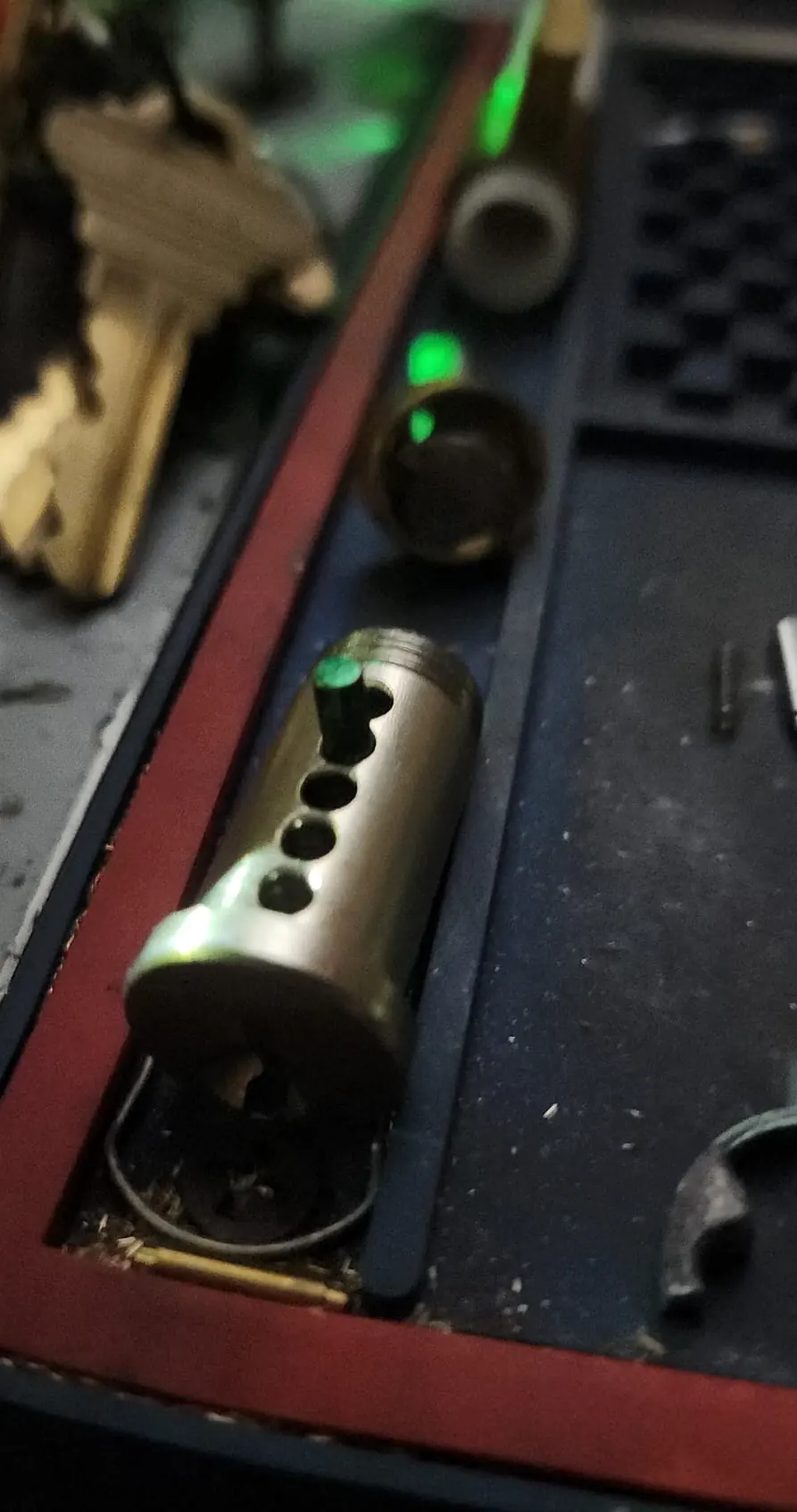
A typical house lock holds a row of small spring-loaded pins inside a brass cylinder. Each pin has a set height, and your key lifts every pin to exactly that height so the cylinder can turn. Rekeying swaps those pins for a new set cut to a different key.
The result is a lock that looks identical but only responds to the new key. Anyone holding an old copy, whether it is an ex-tenant, a past contractor or a stranger who found a lost key, can no longer turn it. You keep the same deadbolt, handle and strike plate, so there is nothing to repaint or refit.
When Is Rekeying the Right Choice?
- You just moved in — You do not know who still has a key to the previous owner’s or tenant’s locks. Rekeying resets that without paying for new hardware.
- A key was lost or stolen — If the lock itself works well, a new key cut to new pins closes the gap the missing key left.
- After a breakup or a staff change — Anyone who held a key before is cut off in one visit, while everyone you trust gets a fresh one.
- You want every door on one key — Several locks can be set to the same key, so you carry one instead of five.
Rekey the Lock or Replace It: How Do the Two Compare?
Rekeying
Best when the lock still turns smoothly, closes firmly and looks sound. It keeps the hardware you already have and changes only who can open it.
Replacing
Best when the lock is loose, rusted, broken, or you want a stronger or different lock. A new lock also comes with new keys, so it covers the same security gap.
Which one for a damaged lock
If the key sticks, the handle wobbles or the bolt drags, replacement is the safer choice. Our guide on is it cheaper to replace locks or rekey them? compares the two side by side.
Need help now? (240) 866-3002
What Should You Do Before Calling About a Rekey?
- Count the locks you want changed — Walk around and list every exterior door, including a garage entry door, a side gate and any padlock you use. Write down which ones you want on the same key.
- Gather every key you have — Collect the working keys, including spares. The locksmith needs one working key per lock to start, or the lock can be opened and rekeyed from scratch.
- Test each lock — Turn the key several times in each door. Note any lock that sticks, grinds or needs jiggling, because those are candidates for replacement rather than rekeying.
- Check the deadbolt and the latch — Make sure the bolt fully extends and the door closes without being pushed. A bolt that does not seat properly is worth repairing at the same visit.
- Decide who gets a new key — Think about family, a house sitter, a cleaner, or an employee. Each person you list receives a new key after the rekey.
- Be ready to prove the property is yours — A photo ID, lease or utility bill with the address shows we are rekeying the right door for the right person.
- Test every new key before we leave — After the rekey, try each new key in its lock several times and check that the old key no longer turns. Do this while the technician is still there.
Is It Safe to Rekey a Lock Yourself?
Some people buy a rekey kit for their own door. If you try it, work on one lock at a time, keep the small parts in a tray, and test the lock before you close the door. A mistake can leave a door that will not unlock from either side.
If you only have a lock that is jammed or half-assembled, or if the lock is on a door you rent or on a business, call a professional. Our lock rekeying service is done at your door, so you do not need to take anything apart or carry a lock anywhere.
Are There Locks That Cannot Be Rekeyed?
Some locks are built so the cylinder cannot be changed, and some cheap locks are simply not worth rekeying. In those cases, replacing the lock is the better path, and we say so. Our post on what locks can locksmiths not open? explains the limits of locksmith work in general.
Owner-level rule: a locksmith will only rekey a lock you can show you own or rent with the owner’s permission. We ask for that proof every time, because it protects you and the next person who lives there.
Need help now? (240) 866-3002
What Happens After a Lock Has Been Rekeyed?
After rekeying, store the old keys somewhere safe or destroy them, since they no longer work in the changed lock but may still fit others. Label the new keys so you know which door each belongs to, and give spares only to people you trust.
If you want a visit, you can reach us through the contact us page or call (240) 866-3002. Our locksmith in Silver Spring team is open 24 hours a day, 7 days a week, and we come to your door. Michael G. has 22 years of locksmith experience, and the work carries at least a 6-month warranty on parts and labor.
Frequently asked questions
Does rekeying a lock mean I need to buy a new lock?
No. Rekeying changes the inside of the lock you already have, so the handle, deadbolt and strike plate all stay. You only need a new lock if the old one is damaged, worn out, or you want a different type.
Will my old key work after the lock is rekeyed?
No. The pins inside the cylinder are reset to match the new key, so the old key can no longer lift them to the right height. We test the old key after the rekey to confirm it has stopped working.
Can a locksmith make a new key from a lock without the original?
Yes, in many cases. A locksmith can open the cylinder and cut a key to fit it, and for a rekey the key is cut to the new pins. We come to your door with what is needed, and we tell you before starting if the lock should be replaced instead.
Can several locks be rekeyed to one key?
Yes. If the locks are compatible, we set them to the same key so you carry one instead of several. We confirm which locks can share a key when we look at each door.
Ready to Rekey Your Locks?
Call (240) 866-3002 and we will come to your door, rekey the lock and test every new key.